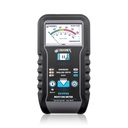
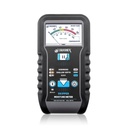
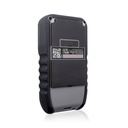
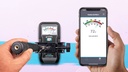
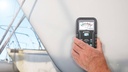
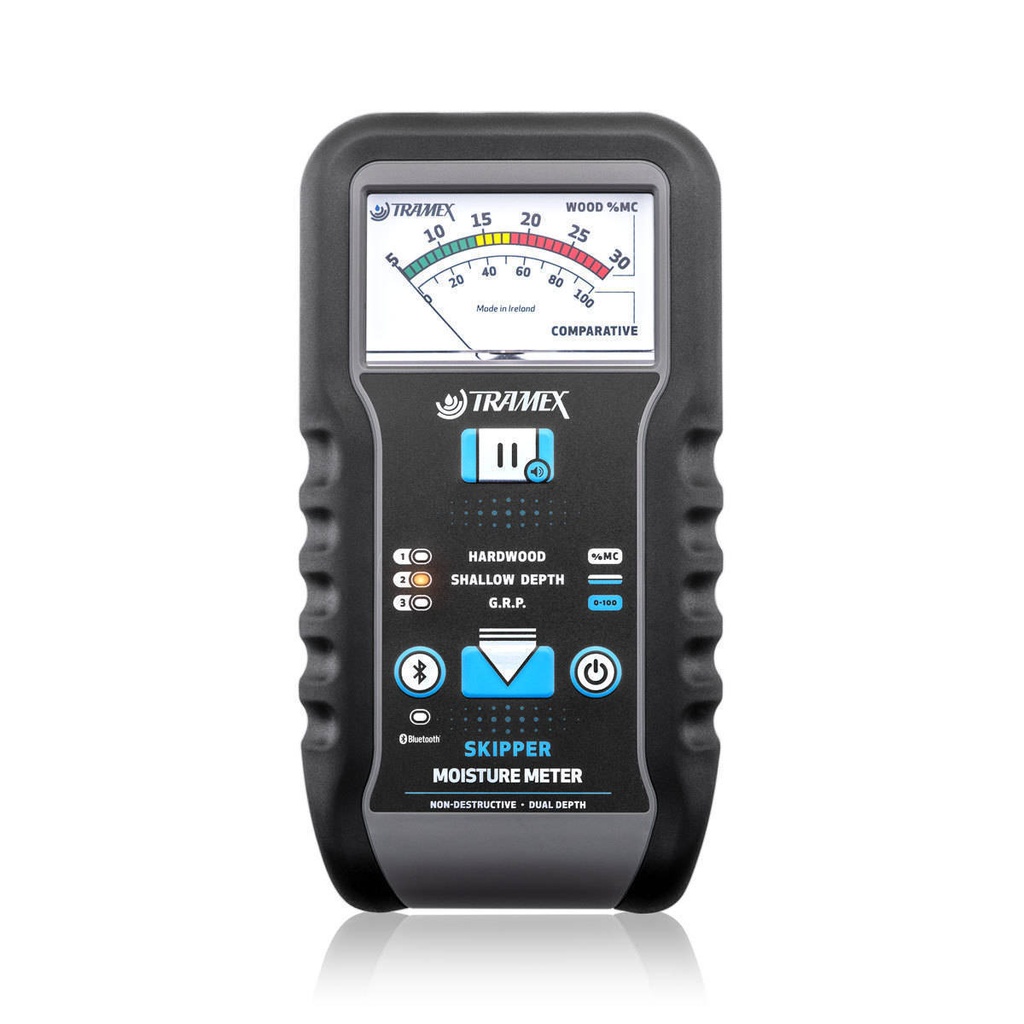
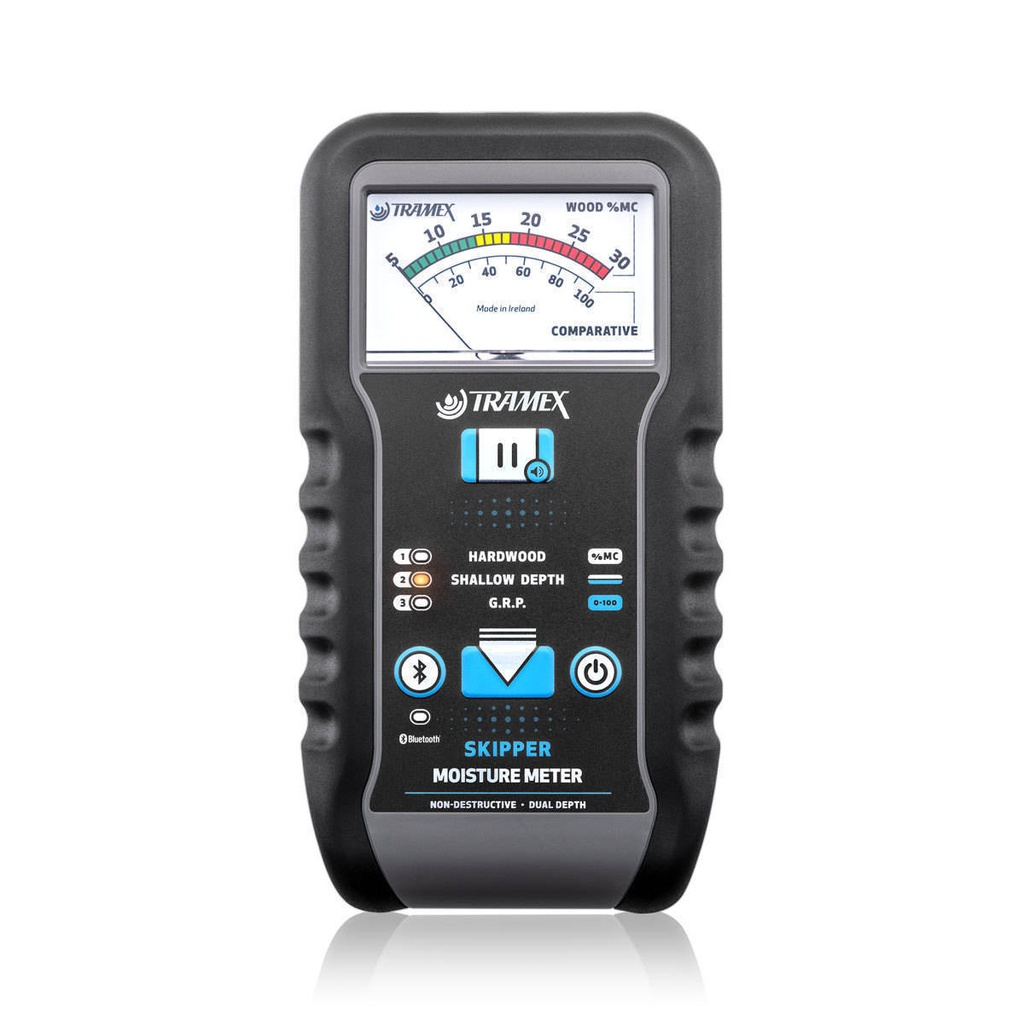
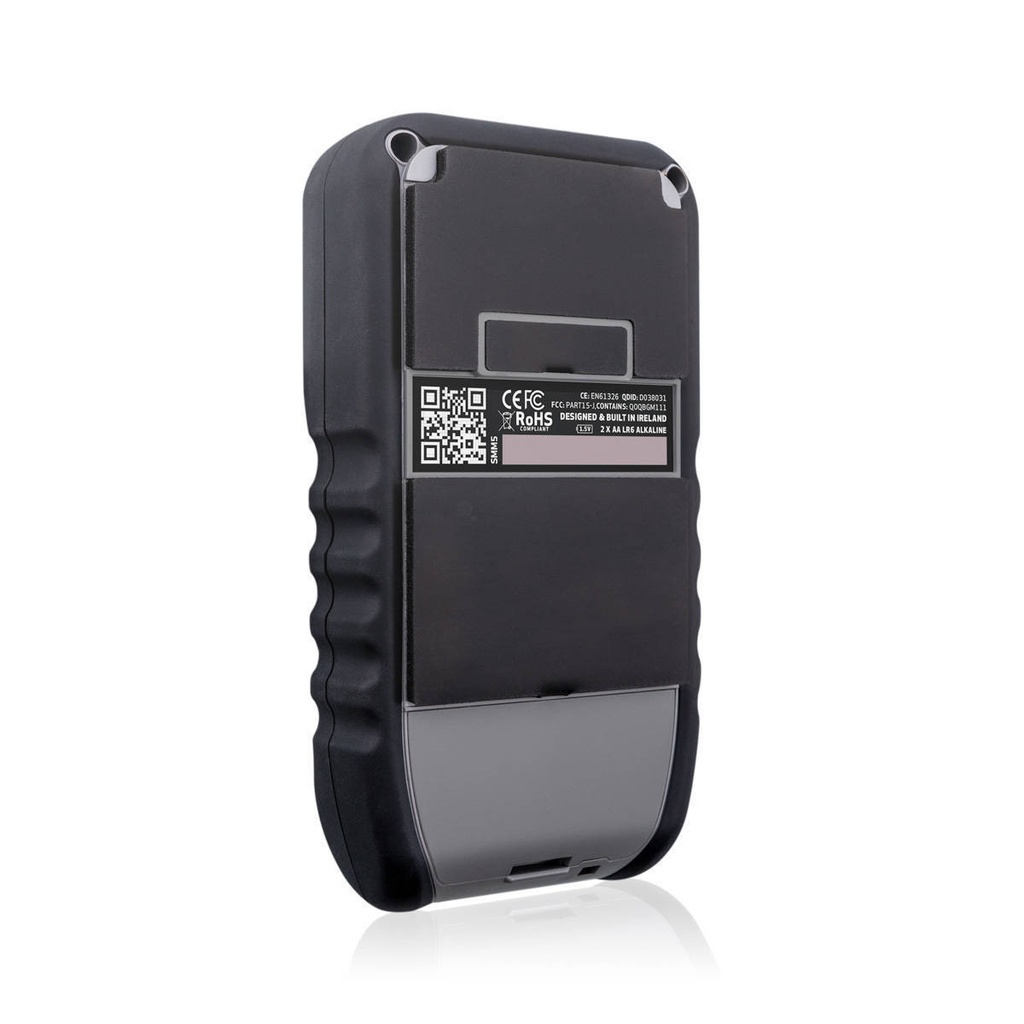
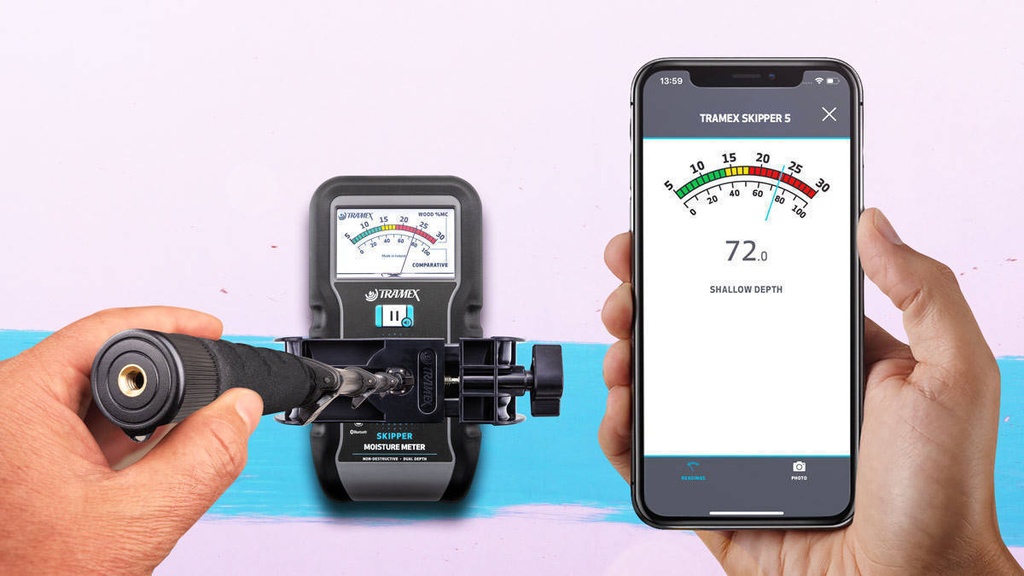
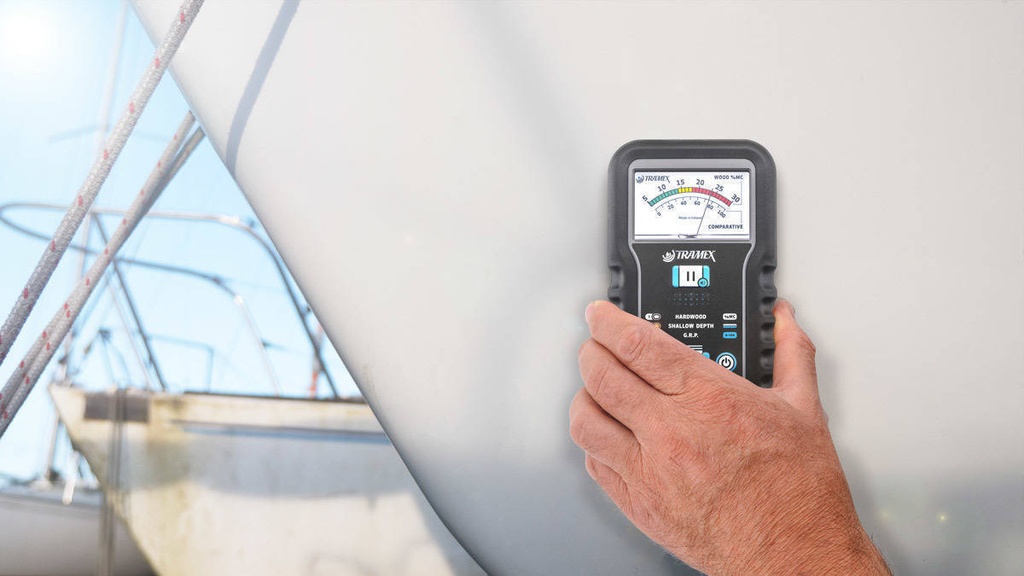
GRP composites and hardwoods are non-conducting materials, nevertheless their electrical properties change with increasing moisture content. The Skipper 5 determines moisture content by applying a high-audio frequency signal between a pair of soft rubber electrodes on the instrument base. A third electrode provides genuine shallow range measurements on a smaller footprint. Capacitive coupling between the electrodes and the sample allows impedance to be determined. This is interpreted as a moisture value and displayed on a large, clear moving coil meter. Additionally, meter readings may be sent instantly to a Tramex App on Android and iOS mobile devices by Bluetooth
USES:
- Identify osmosis problems before blisters appear.
- Identify wet cores in sandwich or cored structures.
- Monitor hulls for drying before repairs and osmosis treatments.
- Check timber for excess moisture before painting, sheathing or varnishing.
Effective osmosis treatment requires the complete removal of the hygroscopic solutes that are responsible for absorbing and retaining moisture and forming osmotic cells in GRP composites. Featuring both deep and shallow modes the Skipper 5 is the ideal instrument for locating moisture associated with these solutes to help ensure successful treatment. Marine timbers also suffer from excessive moisture which causes blistering and loss of paints and varnishes. Trapped moisture encourages fungal growth and black fungal staining. The Skipper 5 enables quick surveying over moisture over large areas, will read through paints, varnishes and sheathing such as Cascover without causing damage and may be used to find and trace leaks above and below decks.